Introduction
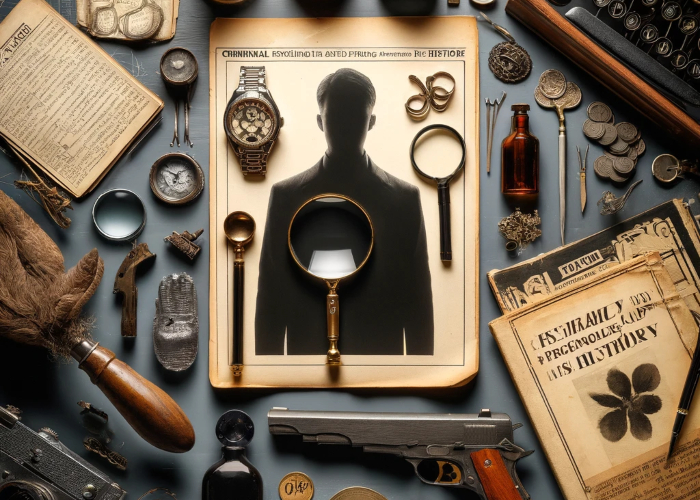
Criminal profiling may seem like a modern innovation, popularized by FBI agents and true crime documentaries—but the roots of offender analysis go back much further. From Victorian-era detectives speculating about Jack the Ripper’s personality to today’s data-driven behavioral analytics, criminal profiling has evolved into one of law enforcement’s most compelling tools. What began as educated guesswork is now an interdisciplinary science shaped by psychology, criminology, forensics, and technology. Here’s how criminal profiling developed over the last century—and how it’s continuing to evolve in the digital age.
The Early Years: Jack the Ripper and the Birth of Behavioral Analysis
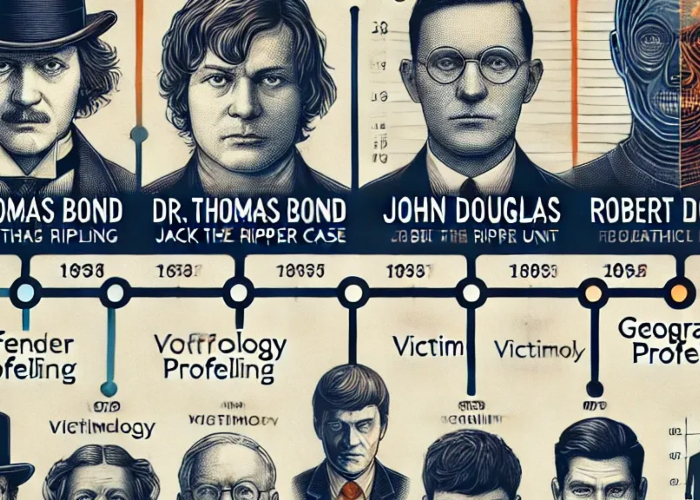
The first known attempt at offender profiling occurred in 1888, during the investigation of Jack the Ripper in London. Police surgeon Dr. Thomas Bond created a profile of the killer based on the brutality and method of the crimes. He speculated the murderer was a solitary, possibly mentally ill man with some anatomical knowledge—insights that eerily foreshadowed modern profiling.
Though rudimentary, Bond’s observations introduced the idea that criminal behavior reflects personality, a concept that would lay dormant for decades but eventually become foundational to behavioral analysis.
Post-War Psychology and the Rise of Profiling Science
It wasn’t until the 1940s and ’50s that psychological profiling began to take shape in the United States. One of the most famous early successes came in 1956, when FBI psychologist Dr. James Brussel helped identify the “Mad Bomber” of New York. Based on the bomber’s patterns, Brussel accurately predicted that the suspect would be a middle-aged man, a former factory worker, and would be found wearing a buttoned-up double-breasted suit. He was right—down to the suit.
This case validated the idea that behavior can reveal identity. It opened the door for psychology to influence criminal investigations in more formalized ways.
The 1970s: The FBI’s Behavioral Science Unit
The turning point for modern profiling came in the 1970s, when agents John E. Douglas, Robert Ressler, and others formed the FBI’s Behavioral Science Unit (BSU). They began interviewing dozens of incarcerated serial killers, including Edmund Kemper, Charles Manson, and Ted Bundy, to identify common traits and behavioral patterns.
Their work led to the development of the organized/disorganized typology, which categorized killers based on crime scene behaviors and control levels. This framework provided practical guidance for active investigations and formed the foundation of the FBI’s Behavioral Analysis Unit (BAU).
Profiling in Practice: 1980s–2000s
Throughout the 1980s and ’90s, profiling helped in several high-profile cases, including:
- The Atlanta Child Murders: Profilers predicted the killer would be a young Black man familiar with law enforcement. Wayne Williams was eventually arrested.
- BTK (Dennis Rader): Profilers contributed to understanding his patterns and compulsions, although Rader ultimately gave himself away via communication with police.
- The Unabomber (Ted Kaczynski): A linguistic profile helped narrow down the suspect pool and led to identification by Kaczynski’s own brother.
reddit
Despite its growing influence, profiling remained controversial. Critics argued it was too subjective and lacked empirical support. However, advances in criminal databases, forensic psychology, and data analytics began to address these concerns.
The Digital Age: Tech Meets Behavior
Today, profiling is undergoing a new transformation—driven by technology, big data, and artificial intelligence. Behavioral analysts now work alongside digital forensic teams to:
- Analyze online activity (search history, social media, forum posts)
- Track digital footprints of known offenders
- Use geographic profiling software to predict where a suspect lives or might strike next
- Incorporate machine learning algorithms to detect behavioral patterns across thousands of cases
In a world where criminals operate online, modern profilers don’t just read crime scenes—they read digital behavior, communications, and metadata. The profile is no longer just psychological; it’s technological.
Profiling Today: A Multi-Disciplinary Science
Modern criminal profiling combines elements from:
- Forensic psychology
- Criminalistics
- Sociology
- Victimology
- Cyber forensics
Rather than focusing solely on the criminal, profilers now build offender-victim-environment models that explore how all factors interact. They consult on terrorism, cybercrime, serial violence, and even cold cases using DNA genealogy and psychological reconstructions.
Importantly, profilers today often serve as consultants rather than leads, working closely with law enforcement, legal teams, and forensic scientists.
Crime and Cognition
From handwritten case notes in Victorian England to data-mined behavioral algorithms, criminal profiling has come a long way. What started as guesswork is now a vital—and evolving—science that bridges the gap between crime and cognition. As technology advances and our understanding of human behavior deepens, profiling will only become more precise, more predictive, and perhaps, even more controversial. But one thing remains certain: in the pursuit of justice, understanding the mind of the criminal is just as important as catching the hand that committed the crime.